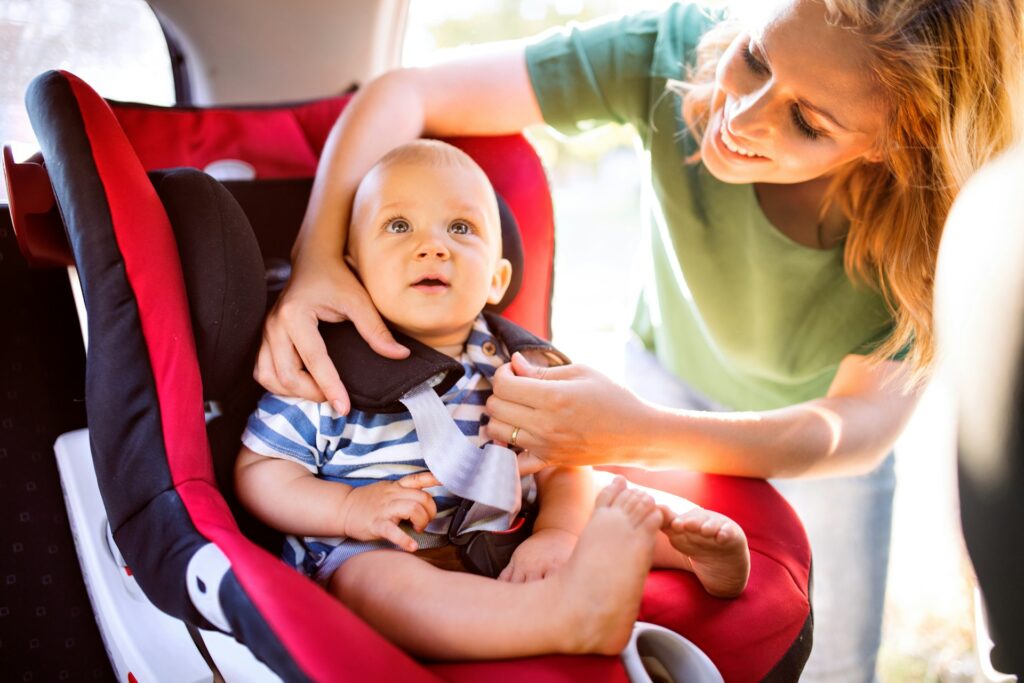
Every summer, heartbreaking headlines resurface: a forgotten child trapped in a hot car. According to the National Highway Traffic Safety Administration, around 37 children die from heatstroke in vehicles each year—that’s two a week. In more than half these cases, parents simply forgot the child was in the back seat. Now, a team of LSU engineering students has taken on this tragedy with a smart alert device designed to stop those moments from turning fatal.
In May, electrical engineering major Victoria Irondi and mechanical engineers Nnamdi Dike and Trevor Perrault unveiled their life-saving prototype: a sensor built into an infant car seat that triggers alerts if a child is left behind. The system uses weight and proximity sensors to recognise when a baby is still in the seat and sends a Bluetooth alert via a paired fob whenever the caregiver moves too far away. It’s a sleek, low-energy system that could slot into existing car seats—no hefty overhaul needed, as detailed in LSU’s official blog.
Turning a Capstone Project into Real-Life Impact
What began as a standard senior capstone project quickly became something deeply personal. The idea was sponsored by David Jenks, whose close family friends lost a child after forgetting them in a hot car. “After learning about the families affected by these incidents,” Irondi explains, “we felt a deep responsibility to develop a solution that could help prevent such tragedies and protect vulnerable lives.”
Over months of collaboration, the team refined their prototype. Meetings centred on choosing reliable sensors, writing clean code, and testing for false alarms. One moment that sticks with Dike: “This project was not just an academic challenge; it was a personal and emotional journey.” Their dedication paid off: their device won praise from the Louisiana Highway Safety Commission and the Passenger Safety Task Force at Baton Rouge’s Child Passenger Safety Conference on June 10.
The students received awards from Lisa Freeman, the Governor’s Highway Safety Representative, alongside certified seat technicians and national safety experts. Freeman lauded the device as “a simple, cost-effective safety measure” capable of reaching everyday families in need.
How It Works—and Why It Matters
At the heart of this system are familiar but dependable technologies: a pressure-sensitive pad under the car seat captures the baby’s presence, and Bluetooth detects the distance between caregiver and seat. If the adult moves too far without lifting the child, an alarm sounds and the paired fob dispatches an alert—putting safety in plain sight.
This design responds to a sobering reality: when car temperatures hit 100°F, internal heat can soar to 145°F in an hour—even with windows open. Open windows do little to help, especially when there’s no alert system to remind someone that a child remains inside. This design aims to keep solutions low-cost and widely accessible.
What sets this LSU device apart is its focus on practicality: it doesn’t require app downloads, vehicle modifications, or premium subscription services. It’s designed to fit into existing routines and budgets.
It also tackles a painful truth: many caregivers are not negligent—they are human. Studies show most cases involve parents deviating from their routine—heading to work instead of daycare drop-off. As one nurse told WBRZ, “Don’t think it can’t happen to you,” because the mistake isn’t intent—it’s memory.
Scaling Up and What Comes Next
Now, with graduation behind them, the team is sharpening their prototype for real-world use. Plans include improving sensor accuracy, reducing battery draw, and shrinking the device for easier integration into commercial seats. They’re also exploring mass-production options—either partnering with child-safety companies or pitching directly to manufacturers. That could open the door to widespread adoption—imagine every newborn seat coming with a built-in heat-death alert as standard. It’s a simple fix that could save lives, backed by data and human-centred design.
Early feedback has been supportive. While similar devices have existed, many haven’t gained traction due to cost or convenience. In contrast, LSU’s version is practical, affordable, and smartly designed to slot into daily life. Still, hurdles remain. They’ll need to validate the device under varied real-world use, consider false-positive rates, child weight diversity, and how Bluetooth ranges differ by car model. Importantly, a successful pilot could demonstrate the public health value—fewer hospitalisations, fewer tragedies, less pressure on emergency services.
A Broader Conversation on Caregiver Safety and Innovation
This isn’t just a one-off project. It points to a principle: everyday tech can solve everyday dangers. From seatbelt sensors to mobile reminders, we rely on systems to keep us safe—why not for one of the most vulnerable lives in our care?
LSU’s success follows a pattern: other student teams have tackled hot-car alerts before, yet few have gained institutional support or funding. The capstone team stands out because their work is embedded in public safety mechanisms and recognised at the state level.
Meanwhile, discussions are emerging: automakers like Subaru and Hyundai now flash reminders to check the back seat, so why not standard sensors too? Tesla’s cabin-overheat protection system—alerting drivers if inside temperatures climb—demonstrates that parent-focused safety tech can exist at scale.
What’s clear is that innovation isn’t just about big inventions—it’s also about thoughtful solutions that integrate into what people do every day.
The LSU car seat alert device is a perfect example: simple, connected, and built with empathy. It reminds us that innovation isn’t only lab work—it’s listening, learning, and fixing real problems. With luck, these young engineers are launching a change that saves lives—one sensor at a time.