What if the reading glasses you reach for every morning could one day be replaced by a simple bottle of drops? Researchers now say that might not be as far-fetched as it sounds. A retrospective study presented at the European Society of Cataract and Refractive Surgeons found that daily eye drops combining pilocarpine and diclofenac helped patients improve near vision and might offer a non-surgical alternative to reading glasses. According to the report on ScienceDaily, the findings suggest the drops could revolutionise how age-related near vision loss (presbyopia) is treated.
The trial involved 766 patients (373 women and 393 men) with an average age of 55. Researchers used three different concentrations of pilocarpine (1 %, 2 % and 3 %) combined with a fixed dose of the NSAID diclofenac. Patients administered the drops twice a day, typically on waking and again around six hours later, with an optional third dose if needed. One hour after the first dose, participants gained on average 3.45 lines on the Jaeger near-vision chart. Within 12 months, about 83 per cent of patients maintained good functional near vision, and the effect lasted up to two years in many cases.
Side effects were mild and infrequent: 32 per cent reported temporary dim vision, 3.7 per cent had irritation during instillation, and 3.8 per cent experienced headaches. Importantly, there were no serious adverse events such as increased intraocular pressure or retinal detachment during the study period.
What the drops actually do
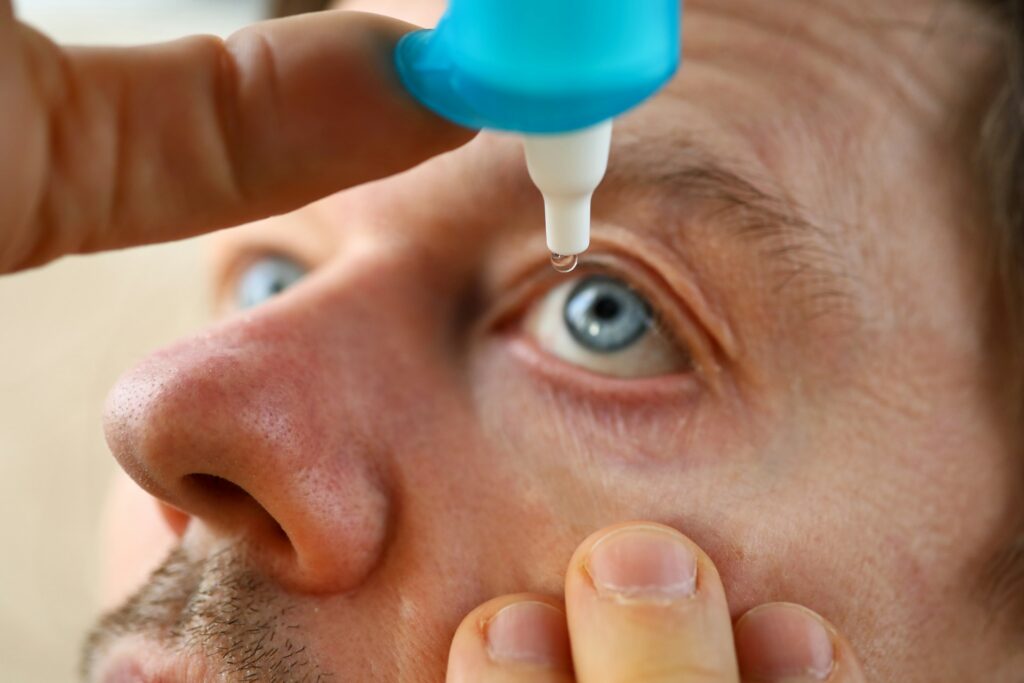
Pilocarpine constricts the pupil and contracts the ciliary muscle, which helps the eye focus at different distances, while diclofenac helps reduce inflammation and the discomfort often caused by pilocarpine’s action. The result is improved near vision without needing a physical lens in front of the eye. Researchers noted that quantifiable gains were dependent on how severe someone’s presbyopia was to begin with: patients at an earlier stage saw strong results with lower concentrations, while those further along needed stronger formulations.
Reading glasses aren’t ideal for everyone; some people dislike wearing them, others worry about them slipping off or having to switch between multiple pairs. For those who aren’t good candidates for surgery, options have been limited. This study opens the door to a pharmacological alternative. In simple terms: for a large group of people who are battling near-vision loss, these drops could offer more convenience and fewer compromises than glasses or surgical fixes.
At the same time, it’s not a magic bullet. The study authors emphasised that the treatment might not eliminate the need for glasses in all cases. It was also a single-centre, retrospective study, not yet a large-scale randomised trial, so more work will be needed before this becomes a standard option. Researchers called for multi-centre trials with diverse populations, longer follow-up periods and comparisons with existing treatments.
What this means in real life
If you’re someone in your 40s or 50s who’s just started reaching for reading glasses, this research offers something to watch. If further research confirms the results, you might one day have the choice to try drops rather than resign yourself to glasses. For eye-care professionals it means an option that adds to the toolkit: not replacing glasses or surgery entirely, but offering a middle ground.
For the wider public it’s a reminder that medical innovation often advances in everyday places, rather than only dramatic new machines or surgeries. This is about something simple, low-cost and scalable: a set of drops used like any other medication. If it works and becomes widely available, it could change how we deal with a vision issue that affects virtually everyone as we get older.
The next steps are clear. Researchers need to run broader trials, assess long-term safety, refine who will benefit most and figure out how the drops would be used in routine practice. Regulatory approvals, cost-effectiveness and access will all come into play if this becomes a standard treatment.
But for now, the study offers a hopeful note. The idea that daily eye drops might one day replace, or at least reduce reliance on, reading glasses is compelling. It’s a reminder that sometimes the future of medicine looks simple: not a giant machine or major surgery, but something you drop into your eyes like any other medicine and carry on with the day.